How to become a Sound Healer
The Complete Guide (2026)
Sound healing is one of the most ancient forms of medicine on Earth. And right now, it is having a moment.
More and more people: yoga teachers, therapists, musicians, curious humans — are feeling called toward this work. Some arrive with years of practice behind them. Others arrive with nothing but a deep knowing that sound matters, that it moves something in them they can't quite name.
If you're one of them, this guide is for you. We'll walk you through what sound healing actually is, what training really involves, what to look for in a certification program, which instruments to start with, and how to build a practice that feels true to you.
This is the guide we wish we'd had when we started.
What is Sound Healing?
Sound healing simply said is the use of intentional sound to support the health of the nervous system, emotional body and overall wellbeing of a person or group.
It is not music therapy (though the two can overlap). It is not performance. It is a practice of presence, of using sound as a vehicle for the listener to arrive more fully in their own body, their own breath, their own moment.
Sound healing is practiced across nearly every culture and tradition on Earth. Indigenous traditions around the world use drums, rattles, and voice for healing and ceremony. Ancient Greek temples used sound for therapeutic purposes. Chanting Mantras is an integral part of the Vedic Culture… What modern neuroscience is now beginning to document (the effect of sound on brainwave states, heart rate variability, and the nervous system) is something human beings have understood experientially for thousands of years.
What Does a Sound Healer Actually Do?
A sound healer facilitates what are often called sound baths or sound journeys; immersive experiences in which participants lie down and receive a carefully orchestrated field of sound.
In group settings, this might look like 20 people in a yoga studio, lying on mats, eyes closed, while the practitioner moves through instruments like crystal singing bowls, Himalayan bowls, gongs, chimes, tuning forks, harmonium, voice creating a layered, evolving soundscape that can last 45 minutes to an hour or longer.
In one-to-one settings, the practitioner works more specifically with an individual, often using instruments placed directly on or near the body, tuning the experience to the particular needs of that person.
A skilled sound healer is not just a musician playing instruments. They are a space holder, someone who knows how to read a room, how to respond to what a nervous system is doing, when to build and when to fall silent, when a person needs to be met with stillness rather than sound.
Do you need a certification to practice Sound Healing?
Unlike medicine or psychotherapy, sound healing is not a regulated profession in most countries. You do not legally need a certification to offer sound baths or sound journeys. That said, we always recommend completing a structured training, and here's why.
A good certification program gives you:
A real understanding of how sound affects the nervous system and body
Hands-on time with a wide range of instruments, with skilled feedback
The ability to hold space safely; including how to recognise and support emotional release
A trauma-informed framework so you can work responsibly with diverse participants
Professional credibility with studios, retreat centres, and clients
A community of fellow practitioners
You can absolutely pick up a set of singing bowls and start experimenting. Many of us did. But the difference between someone who has played bowls for a while and someone who has trained in facilitation, music theory and nervous system literacy is significant, for you and for the people you hold space for.
What training paths exist?
There are several routes into sound healing practice, each with different time commitments and depth.
Weekend workshops (10–20 hours) A good entry point if you want to explore before committing. You'll learn basic techniques and get hands-on time. Not sufficient for professional certification but valuable for personal practice and deciding if you want to go deeper.
4-day immersive trainings (25–35 hours) The sweet spot for most people beginning their sound healing path. You receive a comprehensive foundation: theory, instruments, facilitation & live practicum in an intensive, community-held container. YACEP certifications (Yoga Alliance Continuing Education) are commonly offered at this level and recognised internationally.
This is what we offer at Soulravel: our Alchemy of Sound Level 1 is a 30-hour, 4-day training held monthly in Zurich, Sri Lanka, and Germany. It covers sound science, music theory, Playing techniques with many different healing instruments (Himalayan and crystal bowls, gongs, flutes, drums, voice, harmonium), trauma-informed space holding and live facilitation practicum. You leave with the knowledge and confidence to begin offering sound experiences professionally.
Extended diploma programs (50–200 hours) For those who want to go deeper or work in clinical or therapeutic settings. These programs span weeks or months and often cover anatomy, case studies, and supervised client sessions.
Online courses Available from several providers, these work well as a complement to in-person training but are not a substitute for hands-on instrument time and real practicum.
Which Certification should you look for?
The most widely recognised credentials for sound healing practitioners currently are:
YACEP (Yoga Alliance Continuing Education Provider) Recognised internationally, YACEP certification can be added to your Yoga Alliance profile if you are already a registered yoga teacher. Our Level 1 and Level 2 trainings are both YACEP certified.
ISTA (International Sound Therapy Association) Requires a minimum of 200 hours of sound healing education across combined programs. A more comprehensive professional credential for those building a full-time sound therapy practice.
When evaluating any program, ask:
How many hours of hands-on instrument time is included?
Is there a live practicum component; do I actually facilitate real sessions?
Is trauma-informed practice taught?
Who are the facilitators and what is their background?
How big are the groups?
What Instruments Do You Need?
You do not need instruments to start training. Any good program will provide them. But once you're certified, you'll want to begin building your own set.
Where most practitioners start:
A set of Himalayan (Tibetan) singing bowls — versatile, warm and accessible. One well-chosen bowl can be enough to begin. A set of 3–5 covers most frequency ranges for group work.
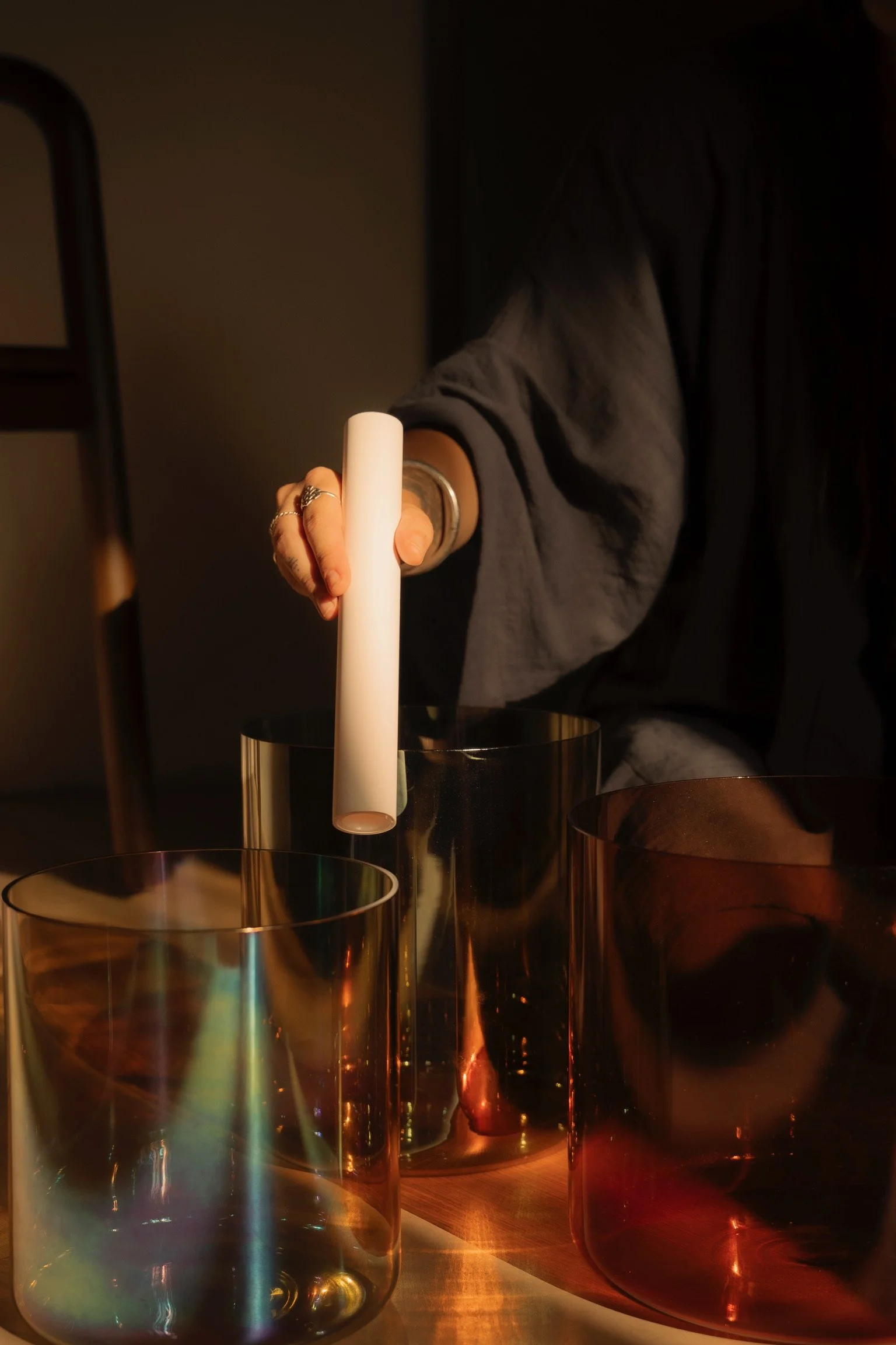
At least one crystal singing bowl — crystal bowls produce a pure, sustained frequency and carry very well in larger spaces. Most practitioners begin with a frosted quartz bowl in C, F, or G. We recommend at least 2 Bowls because that is where the magic starts to happen. In our Online Shop we have curated Sets that are in perfect Harmony and great to start with.
A wind chime or koshi and some texture Instruments (rattles, rain sticks etc.) — beautiful for transitions and closing moments in a sound journey.
What comes later: Gongs, hand pans, harmoniums, tuning forks, drums, flutes — these expand your palette over time. You don't need them on day one.
At Soulravel, we hand-select all the instruments in our Store and offer consultations to help practitioners choose the right set for their practice and budget.
How Do You Build a Sound Healing Practice?
Certification in hand, instruments in bag… now what?
Start with your own circle. Offer free or donation-based sound baths to friends, family, your yoga community. These early sessions are where you build confidence, learn how to read a room & discover your own facilitation style.
Partner with studios and venues. Yoga studios, wellness centres, retreat spaces are all potential partners. Offer a complimentary session to the owner or manager so they experience it firsthand.
Build an online presence. A simple website with clear information about what you offer, where you're based and how to book you is enough to start. Instagram is the primary discovery channel in the wellness space! Document your practice, your instruments, moments from sessions.
Continue your education. The best practitioners never stop learning. Level 2 trainings, gong-specific intensives, voice work, somatic practice… Each layer deepens what you bring into the room.
Charge what reflects the value of your work. This is a real skill and most practitioners undercharge in the beginning. A 60-90 minute sound bath for a group of 20 is worth pricing at least the same level as a yoga class, if not above it.
Is Sound Healing Right for You?
It is if you feel moved by sound in a way that's hard to explain. If you've ever left a sound bath and felt genuinely different. If you find yourself drawn to instruments not just as objects but as living things with presence and medicine.
It is also right for you if you are already a yoga teacher, therapist, healer or space holder of any kind and you're looking for a modality that speaks to the nervous system in a way that words cannot.
You don't need to know where you're going with it. You just need to start.
The path reveals itself through practice.
Ready to Begin?
Our Alchemy of Sound Level 1 Sound Practitioner Training is held in Zurich, Hamburg and Sri Lanka. No prior experience required. YACEP certified. Small groups, comprehensive curriculum, real practicum.
→ View upcoming training dates and sign up at soulravel.com/sound-practitioner-training
Written by Natalija & Jonny, founders of Soulravel.